Welcome To Cockwood Boat Club
scroll
About CBC

Cockwood Boat Club is one of three boating clubs on the west side of the Exe estuary. It originated when a group of local enthusiasts founded the Cockwood and District Boating Association in the late 1960s. In 1974 a lease was arranged with the Crown Estate Commissioners, to manage facilities for club members in Cockwood Harbour.
Members must live within 40 miles of Cockwood. The harbour provides limited moorings for vessels up to a maximum length of 25 feet. Under the rules, the club is managed by an elected general committee, reporting to an annual meeting each January.
For further information, contact cockwoodboatclub@gmail.com
The History of Cockwood Harbour
With thanks to Skip Sterret and Nigel Stoneman
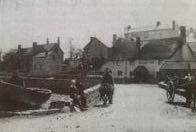
Today, when we look across the harbour, it is easy to see only the boats, the mud and the changing tide. Yet the same waters once carried coal, stone, timber and countless other goods towards Exeter, provided a living for local people and offered shelter to vessels caught by bad weather. The harbour we know as the Sod has been at the heart of Cockwood for generations.
Long before the railway arrived, the Exe was a busy working river. Its channels were shallow, narrow and constantly altered by the tide, making navigation difficult. Cockwood was one of several smaller ports on the estuary where vessels could unload coal and stone, much of it destined for local lime kilns. Timber-carrying vessels also waited in the sheltered waters for the right tide.
Cockwood’s position beside the Warren gave its harbour an important advantage. The waters were sheltered from the open sea and became known as a bad-weather haven. Vessels travelling towards Exeter or Topsham could anchor nearby while waiting for the tide or for conditions to improve. At times, the estuary must have presented a very different sight from today, with large numbers of working vessels gathered in the river. As many as 33 lighters were employed at one period to help transfer cargoes, while colliers were among the largest vessels using the Exe.
But it was not only ships that depended upon these waters. For local people, the river itself was a source of food and income. Cockles, mussels and oysters were gathered from the estuary, although the different fishing rights could lead to disputes. In December 1885, twenty people who held rights to fish the cockle and mussel beds were prosecuted for damaging oyster beds and were each fined £1.
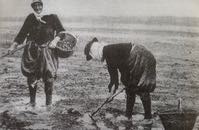
Perhaps the most memorable glimpse into this way of life comes from the story of “Cockle Mary”, a local woman who made her living from the river in the early years of the twentieth century. Her working day began at the harbour. Leaving her barrow at the slipway, she took her rake and basket and made her way to the cockle steps on Warren Road.
Working with the falling tide, she raked the mud and collected cockles, filling quart tins as she went. Rather than carry them all immediately, she buried the filled tins in the mud and marked each one with a white stick. When the tide turned, she returned to collect them. This was her routine for six days of the week, whatever the weather.
On Saturdays, she gathered the week’s harvest and, with the help of a porter, travelled by train to Exeter St Thomas Station. There she sold her cockles for fourpence a quart. It is difficult for us to imagine the physical demands of such a life: working the mud and tides in all weathers, with little protection from the elements, and relying entirely on the river for a living. Yet stories such as Cockle Mary’s bring the history of our harbour to life in a way that statistics and shipping records cannot.
The harbour also supported other local industries. During the eighteenth century, salt works operated at Powderham, Cockwood and Dawlish Warren. Across the wider estuary, Topsham and Lympstone became important maritime centres, with boatyards building commercial and naval vessels. Fishing boats sailed to Newfoundland, while vessels were fitted out for voyages to Greenland and the whaling grounds. Between 1755 and 1787, whale oil and whalebone were brought back to Exeter and sold in its markets. One sandbank on the estuary is named Greenland and serves as a reminder of that long-vanished trade.
Cockwood was also connected to Exeter’s prosperous wool trade. For centuries, wool and woollen goods were among Devon’s most important exports, with Exeter and Tiverton at the centre of production. The river provided the route to overseas markets until the trade declined in the late eighteenth and early nineteenth centuries.
Then came the railway. In 1844, the South Devon Railway was constructed along the western bank of the Exe, effectively separating Cockwood Lake from the main estuary. This marked the beginning of a major change. Railways and improved roads could carry goods more quickly and efficiently, and the importance of river transport gradually declined. Exmouth, which had previously been a small settlement and fashionable seaside resort, developed into an important port during the nineteenth century.
Although the commercial importance of the harbour diminished, its importance to the community did not disappear. Instead, Cockwood developed its own traditions and celebrations. One of the most memorable was the Strawberry Fair, held each year on the Sunday nearest the end of June when the tide was high around teatime.
Baskets of strawberries were spread along the harbour wall, and visitors came from across the area, some even rowing over from Exmouth. For a small charge, they could eat as many strawberries as they wished, accompanied by plenty of cider. The fair eventually disappeared, but the tradition of gathering around the harbour continued in the form of the Cockwood Revels. Organised by the local boat club, the events took place around the highest evening tide of summer, with activities taking place on the water and, inevitably, in the mud. The harbour wall filled with spectators, and the Anchor Inn did a lively trade. The strawberries had gone, but the spirit of the gathering remained.
The Sod has also witnessed its share of drama. In the early 1920s, the harbour was filled with logs after a freighter unloaded its cargo and floated the timber into the harbour. In December 1943, the South Coaster, a Cardiff steamship carrying coal to Exmouth, ran aground on the Pole Sands and broke her back. The wreck was later moved into the shallows and partially dismantled. In recent years, the mast fell, but the hull is still visible at low tide.
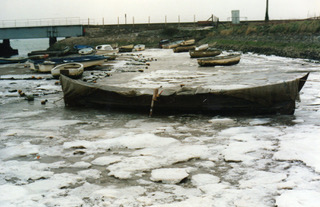
The winter of 1974 brought another remarkable event when the harbour and much of the Exe froze. Large ice floes moved with the tide, damaging moorings, landing stages and navigation buoys. Boats could not safely use the river until the ice had cleared. The last time the harbour froze was in 1997.
By the end of the twentieth century, commercial traffic had almost disappeared. The last significant working vessel associated with the Exe was a sewage boat operated by South West Water, whose use ended in 1999 following changes in regulations governing the disposal of waste at sea.
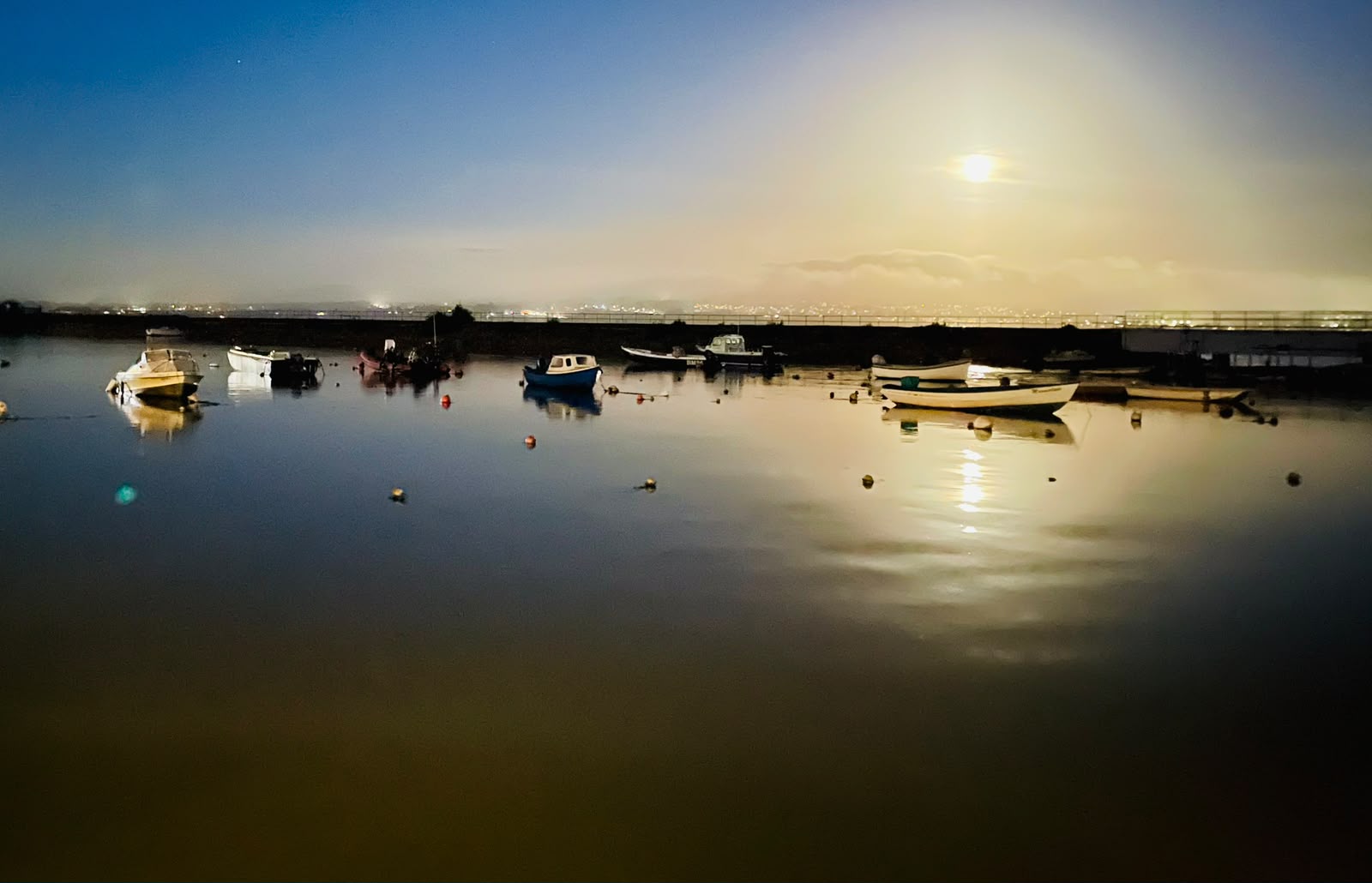
Today, the harbour has a quieter purpose. Sailing boats, cruisers and small craft have replaced the cargo vessels, while the estuary is valued for recreation, tranquillity and wildlife. Yet when we look across the harbour, we are looking at the same tides that brought ships to Cockwood, sustained people such as Cockle Mary and provided the setting for fairs, celebrations and countless local memories.
If you would like to read more about the history of Cockwood and the Warren we recommend Skip Sterret and Nigel Stoneman’s excellent book, Cock’ood and The Warren – An Historical View.
Cockwood
Latitude: 50° 36’N
Longitude: 03° 26’W
Country: England
Ownership: Crown Estates
Type: Private
Usage: Leisure, Fishing
Address: Cockwood Boat Club
Telephone no: 01626 891375